Sand in the Coffee, Vol. 29: reading the july sky — how to beat the afternoon storm
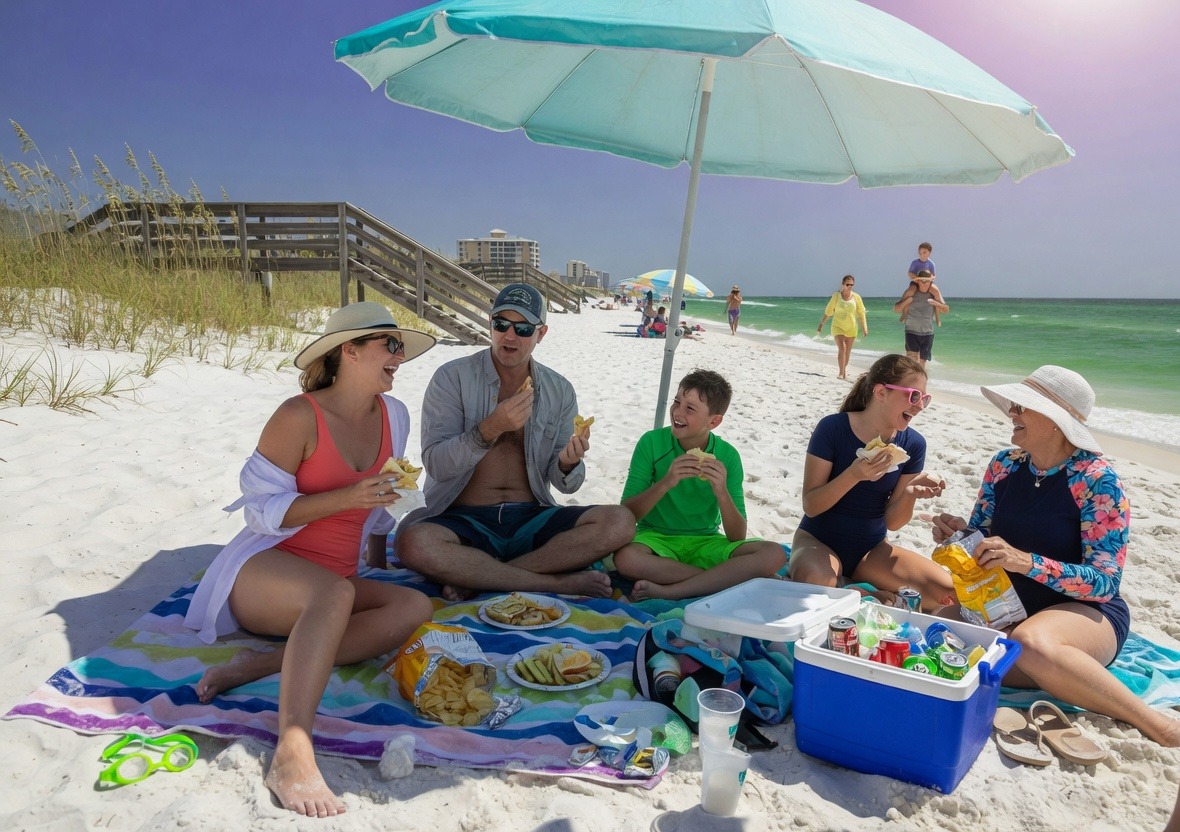
Cup’s poured, and it’s the Fourth of July, which means we’ve officially entered the stretch of summer where the sky runs on a schedule. If you’ve been down here more than a few days in July, you’ve seen it: a morning so blue it looks rendered, a lunchtime where the clouds start stacking up over the mainland like somebody’s building something, and then — somewhere between two and five — a thunderstorm rolls through like it made a reservation.
Visitors see a 40% chance of rain in the forecast and start talking about canceling the beach day. Locals see the same number and just… adjust the schedule. That’s the whole column today: how to stop treating the July storm like a surprise and start treating it like the roommate it is.
First, Understand What That Rain Percentage Actually Means
In July down here, “40% chance of storms” almost never means “it might rain all day.” It means scattered storms will pop up somewhere in the area, mostly in the afternoon, and any one spot has a decent chance of catching one for an hour or so. The morning is usually not in the conversation at all.
This is the single biggest thing visitors get wrong. They see the percentage, imagine a gray Seattle drizzle from dawn to dusk, and write off the whole day. Meanwhile the actual weather is six hours of postcard followed by one dramatic hour of thunder followed by a rinsed-clean evening. Don’t cancel the day. Rearrange it.
The Shape of a July Beach Day
Here’s how I build a beach day this time of year, and it works more days than not:
- Morning is the main event. Get to the sand by 8 or 9. The Gulf is usually at its calmest, the light is gorgeous, the heat hasn’t gone full furnace yet, and the storm machine hasn’t spun up. If you only get one long stretch on the beach, this is it — plan like the afternoon doesn’t exist and let anything you get later be a bonus. Check conditions before you walk out; flags and surf still change day to day, storm or no storm.
- Watch the sky over the land, not the water. July storms here mostly build inland over the hot ground and drift. When the clouds to your north start going from flat and white to tall and cauliflower-shaped, you’ve generally got a comfortable window to start thinking about lunch. Tall, dark, and grumbling means the window is closing.
- Let lunch be your storm shelter. The classic local move is timing your longest meal of the day to the storm. Order the appetizer when the thunder starts, and by the time you’ve finished dessert and argued about whether to get another round, the sun’s usually back out. A rainy hour in a seafood joint is not a ruined vacation. It might be the best hour of the trip.
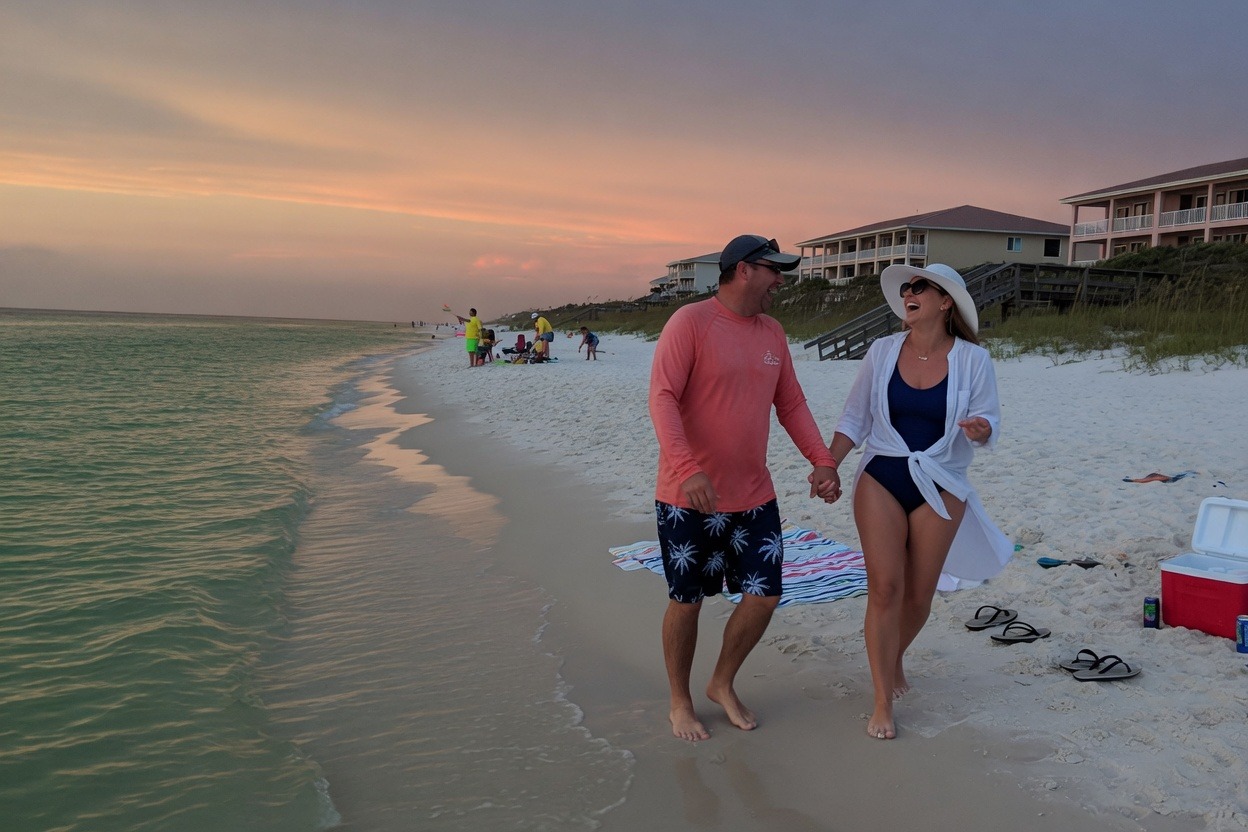
- Trust the evening. A storm-scrubbed July evening is one of the prettiest things this coast does — cooler air, glassy water, clouds doing their big dramatic golden-hour routine offshore. Some of the best beach hours of the whole month happen between 5 and sunset, after everybody who gave up on the day has gone home.
Lightning Is the One Non-Negotiable
I keep this column light, but here’s the serious paragraph. When you hear thunder — even distant, even with sun still on your towel — start packing up. The beach is the tallest-things-are-you situation, and Gulf Coast storms throw lightning well ahead of the rain. Get off the sand, out of the water, and under a real roof (a beach umbrella is not a roof, and neither is a pavilion if you can help it). Wait until the storm’s clearly past before you head back out. The storm will take its hour whether you respect it or not; the smart move is to respect it from inside somewhere with air conditioning and a fryer.
Also: that first gust of cool wind that smells like rain? That’s not the storm saying hello. That’s the storm saying it’s already here. Don’t try to squeeze in ten more minutes.
The Rainy-Hour Bench
Keep a short mental list of “storm hour” moves ready so nobody’s sitting in the condo staring out the window:
- A long lunch somewhere you’ve been meaning to try — storm hour is the one time in July you might walk right in without a wait.
- The souvenir-and-sunscreen run you’ve been putting off. Do it while the sand’s off-limits anyway.
- Check the events calendar — plenty of what’s going on around here in July is indoors or evening-timed, and the storm hour is a good time to plan the night.
- Naps. I’m a five-year resident and a professional. The storm nap is a legitimate coastal tradition and I will not be taking questions.
The Mindset
The July storm isn’t weather getting in the way of your beach day. It’s the coast’s built-in intermission — the thing that clears the heat, empties the sand for round two, and gives you permission to eat hushpuppies at 2 p.m. Plan the morning hard, hold the afternoon loosely, and keep an eye on the northern sky. And if the Gulf side’s acting up after the storm, remember the case I made for the bay side — the protected water over there settles down faster and pairs nicely with a post-storm evening.
Front-load the day, respect the thunder, trust the evening.
Wave when you pass.
— Chris