Sand in the Coffee, Vol. 31: the 3 o'clock storm is not ruining your day
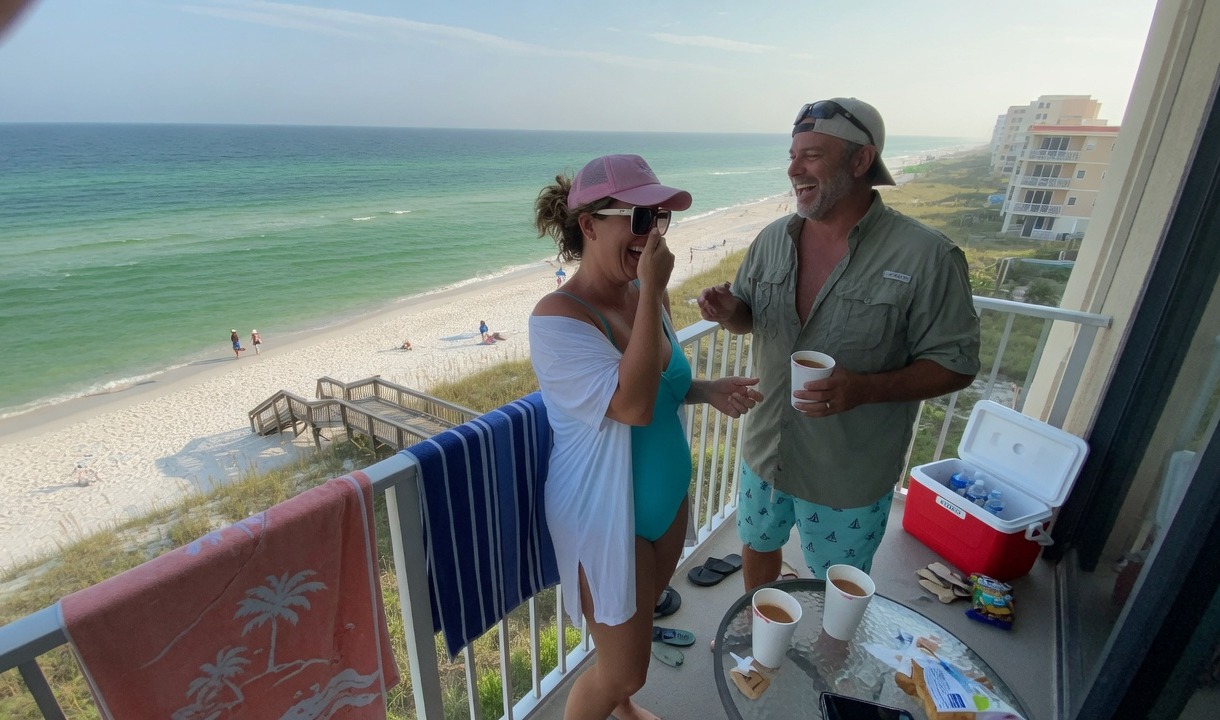
Cup’s poured, and out over the bay there’s already a little cauliflower of cloud going up, which in July means the coast is loading tomorrow’s afternoon show a day early. Sit down. We need to talk about the 3 o’clock storm.
Every July, I watch the same scene play out. A family checks the forecast, sees “60% chance of thunderstorms,” and cancels the whole beach day. They spend a gorgeous morning at a putt-putt course under a cloudless sky, and by the time the twenty-minute downpour actually shows up mid-afternoon, they’ve missed the best six hours of weather this coast produces. Don’t be that family. The July storm isn’t a coin flip on your whole day — it’s an appointment, and it mostly keeps regular hours.
How the July Sky Actually Works
Summer down here runs on a daily engine called the sea breeze. The land heats up faster than the Gulf, air rises over the hot ground, and moist Gulf air rushes in to replace it. Where those two collide, clouds tower up and — usually somewhere between 1 and 5 p.m., with 3 o’clock as the classic — somebody gets a thunderstorm. Then the sun sets, the engine shuts off, and the evening clears out like nothing happened.
That “60% chance” doesn’t mean it rains for 60% of the day. It means most spots will see a storm at some point, usually for 20 to 45 minutes. The morning is almost always the safest bet, and the evening is usually salvaged. The forecast isn’t lying to you; it’s just answering a different question than the one you’re asking.
The Shape of a Smart July Day
- Morning is sacred. From sunrise until about noon, the sea breeze hasn’t organized yet and the sky tends to be at its cleanest. This is your long beach block. Check conditions before you go and get out there early — the bonus is that the sand hasn’t reached griddle temperature yet either.
- Keep the midday flexible. Plan lunch, a nap, or anything with a roof for the early-to-mid afternoon. If the storm shows up, you were leaving anyway. If it doesn’t, you got a bonus round.
- Don’t write off the evening. Some of the best beach hours of a July day come after a storm rinses everything — the air drops ten degrees, the crowds have bailed, and the light goes soft. Storm at 3, back on the sand by 5:30 is a completely normal Perdido Key rhythm. Check the events calendar too; evening plans down here assume the afternoon shuffle.
Reading the Sky Yourself (Better Than the App)
The radar app tells you where a storm was. Your eyes tell you where one is going up. Two things worth learning:
Watch for the towers. Flat, puffy fair-weather clouds are fine. When one starts building vertically — stacking up tall and bright white like a head of cauliflower — that’s a storm assembling, and you’ve usually got a comfortable window before it matters. When the top goes flat and smears out like an anvil, it has matured, and it’s time to pay real attention to where it’s drifting.
Thunder is the whole rule. If you can hear it, the storm is close enough for lightning to reach you — period. Off the sand, out of the water, into a car or a real building (not the pavilion, not under the pier). Wait until 30 minutes after the last rumble before heading back out. That’s not me being cautious; the beach is the tallest-thing-is-you environment, and lightning is the one part of the afternoon storm that isn’t charming.
A Few July Storm Habits Worth Stealing
- Set up camp so you can break it down in five minutes. July is not the month for the eleven-piece beach compound. If you can grab everything in two trips, a storm is a shrug instead of a scramble.
- The bay side plays by the same rules but feels gentler — the storms cross it just the same, but the water calms back down faster afterward. I made the full case for the bay a few volumes back, and storm season only strengthens it.
- Rain on your first day means nothing. I’ve watched visitors take one washed-out arrival afternoon as a verdict on the whole week. It isn’t. Tomorrow morning the engine starts fresh, and the odds are back in your favor by 8 a.m.
The Mindset
Locals don’t check the July forecast to find out if — we check to figure out when, and we build the day in the gaps. Beach hard in the morning, lunch when the sky gets ambitious, and let the storm do the one genuinely useful thing it does all summer: clear the beach and cool it off just in time for you to walk back out and have it nearly to yourself.
The 3 o’clock storm keeps its appointments. Keep yours earlier.
— Chris