Sand in the Coffee, Vol. 38: how to spot a local in one glance
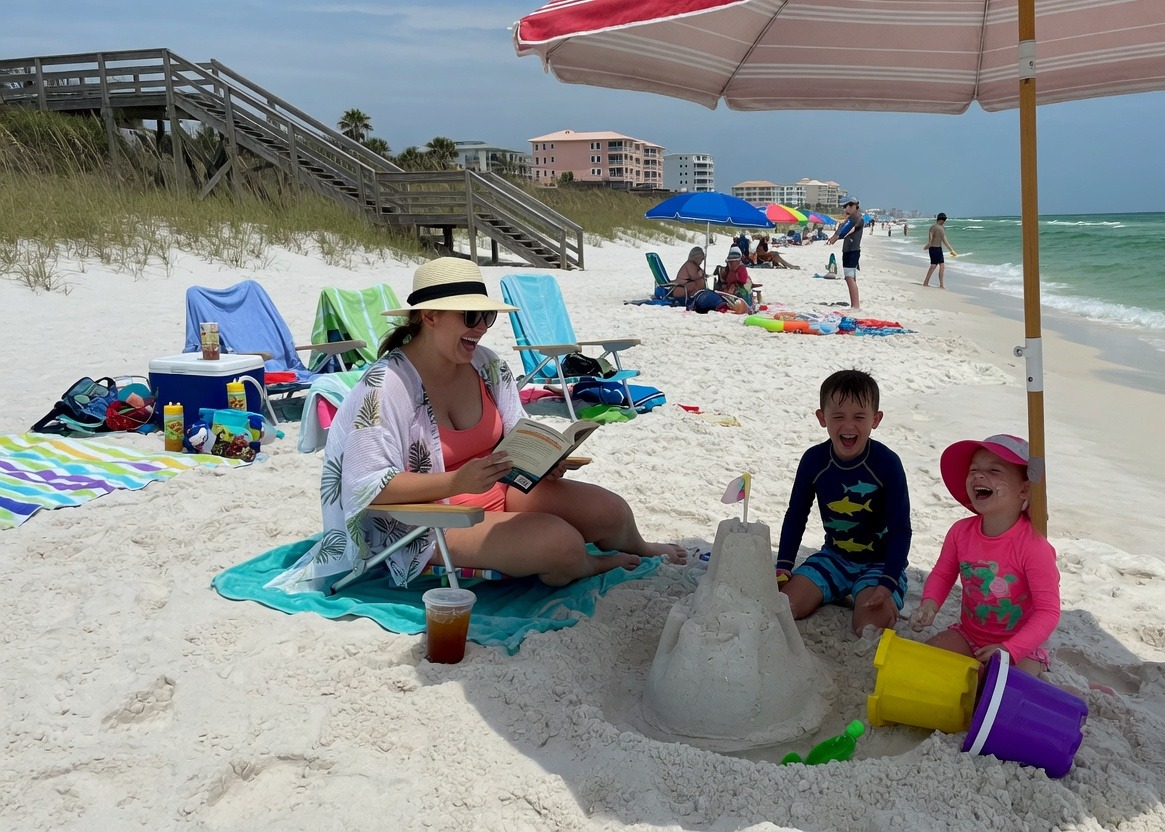
The myth is that locals down here don’t go to the beach in July. We go constantly. We’re just nearly invisible when we do it — quieter gear, quieter hours, quieter entrances. Once you learn the field marks you’ll spot us everywhere, and here’s the actual point of this column: every one of those field marks is a move you can copy, and every one of them will make your week better.
So. The five giveaways, and what to steal from each.
1. The Gear (or the Lack of It)
A visitor arrives at the boardwalk like a wagon train — cart, canopy, cooler, six chairs, a mesh bag of toys, somebody carrying a pizza for reasons nobody remembers. A local arrives carrying one chair and a water bottle, maybe a rod. That’s it. That’s the whole rig.
Steal this: you don’t need less joy, just fewer trips. Decide what the next three hours actually require and carry only that. The ocean supplies the entertainment; it’s kind of its whole thing.
2. The Flag Glance
Watch people come over the dune walkover. Visitors look at the water. Locals look at the flag pole first — one beat, flag color logged, then the water. It’s as automatic as checking a mirror before changing lanes. Yellow means the Gulf is being moody, red means it’s serious, double red means the water is closed and it is not negotiating, and purple means something out there stings, and there’s more than one of it.
Steal this: make the flag your first look every single day — or check conditions before you even pack the car. The Gulf changes personality overnight in July. Tuesday’s flag is not an opinion about Wednesday.
3. The Shuffle
Here’s the giveaway you can spot at a hundred feet: watch how someone enters the water. A visitor high-steps in like they’re climbing invisible stairs. A local slides — feet flat, pushed along the bottom, never lifted. It’s called the stingray shuffle. Rays like to nap in the warm shallows, and a ray that feels you sliding toward it leaves in a hurry, offended but harmless. A ray that gets stepped on from above defends itself, and that’s a very memorable afternoon for the wrong reasons.
Steal this one first. It costs nothing, it looks vaguely like a dance move, and it’s the single most practical piece of local body language we have.
4. The Schedule
Locals hold the bookends of the day and cheerfully surrender the middle. Before 9 a.m. the beach belongs to walkers, shell people, and anglers. From 10 to 3 we hand it over — that’s the visitors’ shift, enjoy it, you paid for it. Then right around 4, when the day-trippers pack up and half the parking spots on the island suddenly reopen, the locals drift back in for the best three hours the Gulf offers: soft light, warm water, no line for anything.
Steal this: if the midday sun has already chewed you up, take the 4-to-7 shift once this week. Then eat late or early — locals hit dinner at 5 or at 8, never 6:30, which is the hour the entire Gulf Coast decides to want fried shrimp simultaneously. A happy hour at 5 o’clock is the local move wearing a disguise.
5. The Wave
On Perdido Key Drive, watch oncoming drivers. Locals give the steering-wheel wave — two fingers lifted off the wheel, no eye contact required, gone in half a second. It’s not a greeting so much as a receipt: seen you, carry on. You’ll also see the beach version, a small nod between strangers at 7 a.m. that contains an entire conversation.
Steal this: wave first. Nobody down here has ever been offended by it, and it’s the fastest naturalization process in Florida. (The advanced course is learning to love the quiet side of the island too — the bay-versus-Gulf question is a whole column of its own.)
One chair, one glance at the flag, feet that slide, the 4 o’clock shift, and a two-finger wave. That’s the whole costume. Wear it for a week and somewhere around Thursday a stranger on the walkover will nod at you like you’ve lived here for years — and you’ll nod back like it’s nothing, which is exactly how it’s done.
— Chris