Sand in the Coffee, Vol. 42: the lagoon side of Johnson Beach
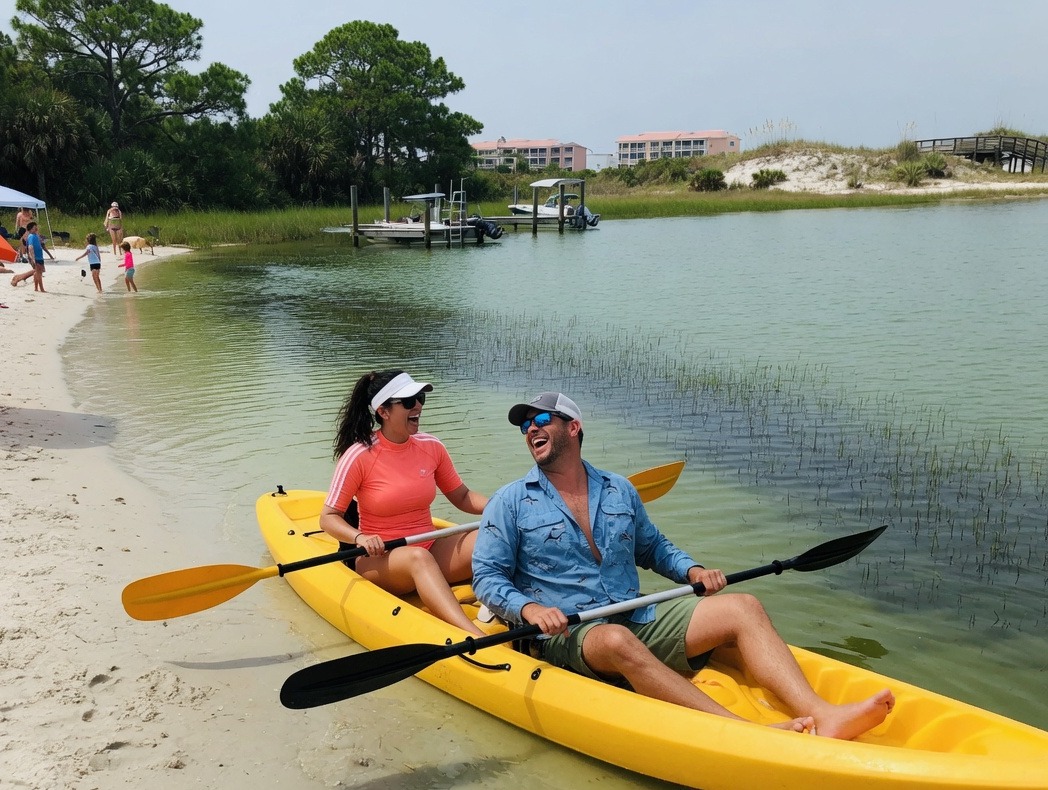
Here’s a myth worth busting in one sentence: Johnson Beach is not one beach.
It’s two. Everybody knows the famous one — the Gulf side, the postcard, the long white ribbon that goes on for miles past where the pavement quits. But the whole time you’re driving in past the ranger station, there’s a second shoreline sitting quietly on your left: Big Lagoon. Calm, shallow, warm as bathwater in July, and most people blow past it for ten straight summers without once putting a toe in.
This is an especially good weekend to fix that. The air show has half the coast migrating toward Pensacola Beach, the July heat is settling in for a long stay, and the quietest water on the island is the stretch nobody’s fighting over.
What’s Over There
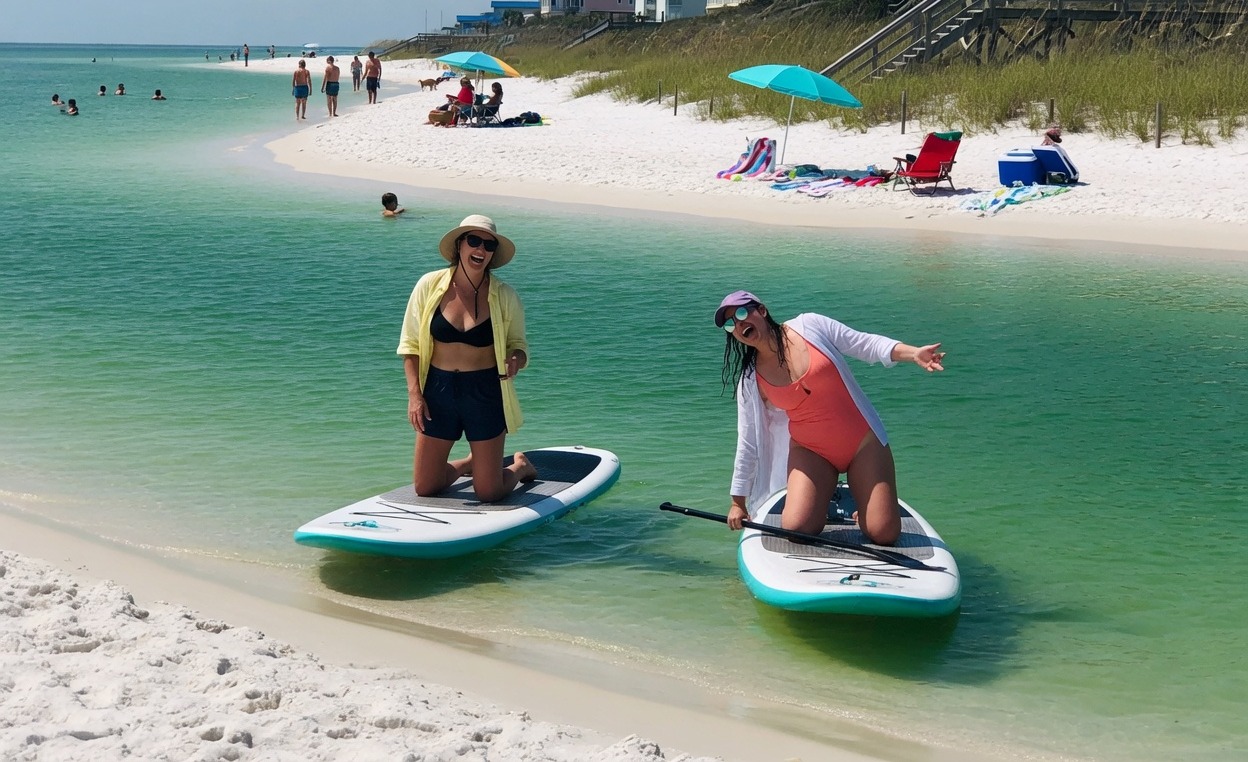
Cross the park road — Gulf on one side, lagoon on the other, it’s maybe fifty steps — and the whole physics of the beach changes. No surf. No undertow conversation. The only waves on Big Lagoon are boat wakes off the Intracoastal Waterway, which means the lagoon’s entire surf report is “a tugboat went by around 2:15.”
What you get instead: water that stays knee-to-waist deep way out, seagrass beds full of hermit crabs and blue crabs, mullet hurling themselves into the air for reasons science has never pinned down, and great blue herons stationed along the shoreline like unpaid lifeguards. Kids can wander fifty yards out and still be standing. The water runs a few degrees warmer than the Gulf, which in July is either a selling point or a warning depending on your constitution.
And because the lagoon faces north, you’re watching the boat parade all afternoon — tugs, trawlers, pontoons, the occasional yacht whose owner made some decisions — instead of staring into the sun.
How to Do It Right
Go in the afternoon. This is the lagoon’s shift. The Gulf side is gorgeous at 8 a.m. and gets choppy and crowded as the sea breeze builds; the lagoon stays flat all day. The move locals make: Gulf in the morning, lunch, lagoon from 2 p.m. on. Check the beach report before you go — when the Gulf flags go yellow or red in the afternoon, the lagoon doesn’t care.
Wear water shoes. Seagrass bottom, not sugar sand. The grass is exactly why the crabs and the fish are there, but bare feet will file a complaint. And do the stingray shuffle — slide your feet instead of stepping. Rays aren’t out to get anyone; they just resent being stood on, which is fair.
Bring your own everything. No chair rentals, no umbrella service, no lifeguards on the lagoon side. Shade, water, snacks — pack it in, pack it out. Your entrance fee at the gate is good for seven days, so keep the receipt and make this a repeat offense.
Mind the signage. Some stretches up in the grass are roped off for nesting shorebirds in summer. Same deal as the turtle squares on the Gulf side: the tape means somebody lives there. Plenty of shoreline left for you.
If anyone in your group fishes, the lagoon side is a gentle place to wade with a light rod, and the fishing page will get you sorted on what’s biting and what’s legal before you cast anything.
The Closing Argument
Stay for the late afternoon and you’ll get the lagoon’s best trick. The light goes gold, the water goes to glass, the herons knock off for the day, and if you’re lucky a pod of dolphins comes through pushing mullet against the shallows — the same show people book boat tours for, delivered free, thirty feet off your chair.
The Gulf is a show-off. It has the waves, the postcards, all the marketing. The lagoon has nothing to prove and nobody standing in it. This week, while the crowds head east toward the jets, be the family that turned left.
Wave at the tugboat. They usually wave back.
— Chris