Sand in the Coffee, Vol. 47: what's actually local on the menu
Here’s the myth, and I’m killing it in the first sentence: a seafood restaurant on the Gulf does not automatically serve Gulf seafood. Some of the best-reviewed, most beach-front, most obviously nautical dining rooms between here and Orange Beach will happily sell you a fillet that spent more time on an airplane than you did getting down here. That’s not a scandal — it’s the supply chain, and half the time it’s perfectly good fish. But you’re on vacation, you’re paying vacation prices, and you’d probably like the water you’re looking at to have something to do with the plate.
So here’s how to read a July menu on this coast.
What’s Actually Swimming Right Now
Late July is a genuinely good window, and the things that are in season locally are the things you should be ordering.
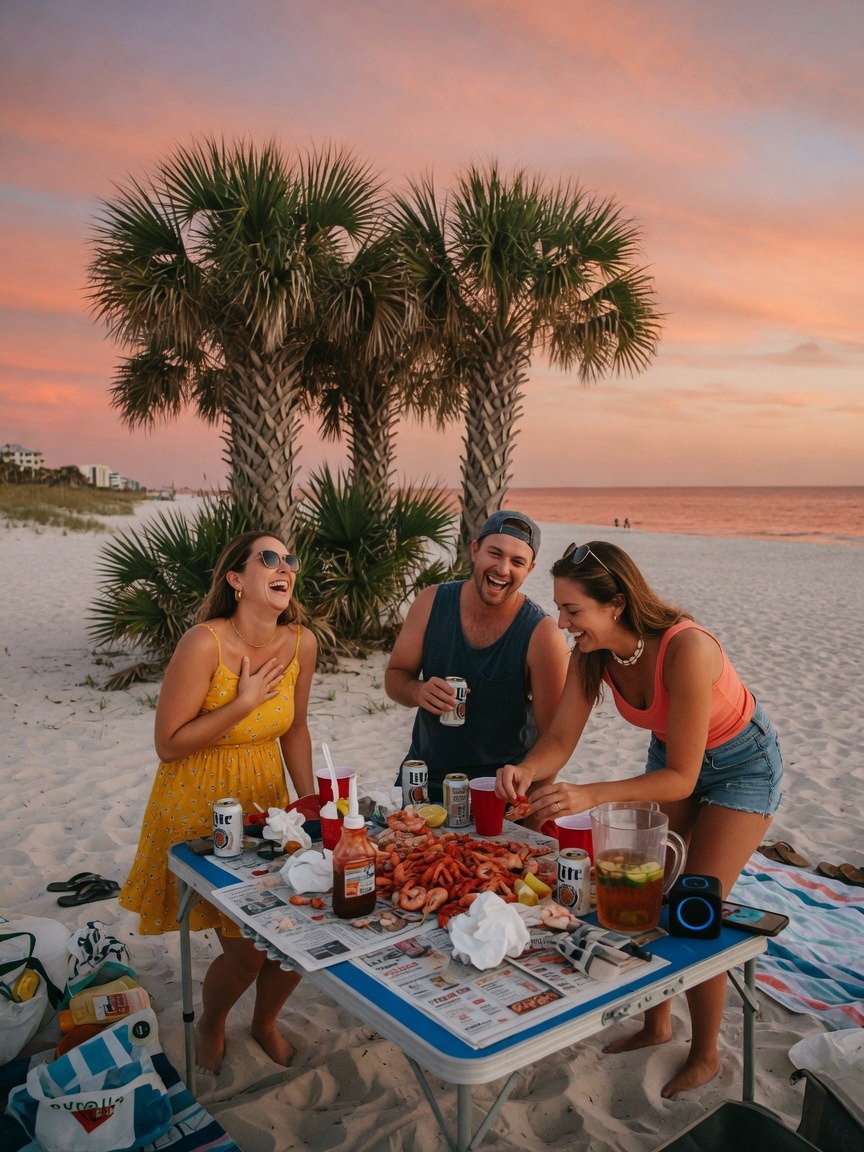
Royal reds. If you see them, order them, full stop. These are deep-water shrimp pulled from a thousand-plus feet out in the Gulf, and they don’t taste like shrimp — they taste like lobster that got humble about it. They’re sweet, they’re soft, and here’s the part people get wrong: they cook in about ninety seconds. A kitchen that treats them like regular shrimp will ruin them. A kitchen that knows what it has will barely cook them at all and serve them with butter and nothing else. Order them boiled or steamed over fried. They’re not on every menu and they’re not always available — which is exactly why you order them the day you see them.
Triggerfish. The local’s favorite that tourists walk right past because the name sounds like a mistake. Firm, white, mild, holds up to grilling. When it’s open and it’s on the board, it’s usually the best value fillet in the building.
Red snapper. The famous one, and worth it — but know that “snapper” on a menu is doing a lot of work. Genuine Gulf red snapper is a specific fish with a specific price. If the number seems too friendly, it’s a different fish.
Mullet, smoked. Not glamorous. Correct. Smoked mullet dip is the single most local thing you can eat here and it’s usually under twelve bucks.
Blue crab, and the soft shells if you’re lucky. Summer is the season. A soft shell sandwich is a whole-fish-in-a-bun experience that first-timers either love immediately or never recover from.
What is not meaningfully local in July: anything called “Atlantic,” anything called “sea bass” without a qualifier, tilapia, and — sorry — the majority of the shrimp in the fried baskets, which is very often imported and very often fine.
The One Question That Works
Don’t ask “is this fresh?” Nobody has ever answered that question with “no.”
Ask this instead: “What came in local this week?”
That’s it. It’s friendly, it’s specific, and it gets a real answer, because it’s the question a server hears from people who live here. You’ll get one of two responses. Either their face lights up and they tell you exactly what the boat brought in — order that, whatever you walked in planning to eat — or you get the vague pause, and the vague pause is also an answer. It means order the burger. At a lot of beach spots the burger is the sleeper anyway.
The follow-up, if you want to be thorough: “Is the snapper Gulf?” Straight question, straight answer, no attitude required from either party.
Where the Signals Are
A few things I trust more than a menu description:
- A board, not a laminate. A chalkboard or paper insert listing today’s catch means the kitchen is buying what’s available instead of what’s frozen in a case. That’s the best single sign in the room.
- A short fish list. Four options they actually have beats fourteen options they sort of have.
- A market-price line. “MP” next to a fillet isn’t a restaurant being coy. It means the price moves with the boats — which means the fish moves with the boats.
- Off the water, on the back bay. The places on the Intracoastal and the back bays over toward Orange Beach — the ones with a dock and a parking lot full of trucks — tend to be closer to the source than the ones with a Gulf view and a valet. Same coast, different business model.
Timing, Because It’s July
Two practical notes and then I’ll let you eat.
First, go early or go late. From about 6 to 8 p.m. in July, every seafood place from Perdido Key Dr through Orange Beach is running a ninety-minute wait for families who all had the same idea at the same minute. Eat at 4:30 like a local and a retiree, or roll in at 8:45. Same kitchen. Different evening. If you’re in the in-between, that’s what happy hour is for — and a lot of the raw bars and back-bay decks run theirs right through the ugly part of the wait window.
Second, this week specifically: we’ve had a storm churning offshore, the flags have been flying red, and the pier’s been closed. That affects the boats too. If the local board looks thin the next few days, that’s not a restaurant cutting corners — that’s a fleet that stayed in. Give it a couple of days after the water settles and the local list gets long again. Check what the beach is doing and you’ll basically know what the menu’s doing.
One more thing. If you get the royal reds and they’re right — soft, sweet, barely cooked, butter running everywhere — tell the server. Out loud. Kitchens down here hear complaints about wait times all summer and almost never hear that somebody noticed the good part.
Eat the trigger. Ask the question. Wave when you pass.
— Chris