Sand in the Coffee, Vol. 55: the stingray shuffle

Nobody down here is scared of sharks. I want to say that plainly, because it’s the wrong animal to worry about. The thing locals actually adjust their walk for weighs about four pounds, is the exact color of the sand, and is right now lying flat in six inches of warm water about a foot off the shoreline, minding its own business and hoping you don’t come down on top of it.
That’s a stingray. And the ten-second habit that keeps you and the ray on good terms has a name: the stingray shuffle. Learn it once this week and you’ll do it on autopilot for the rest of your life.
What You’re Actually Dealing With
Let’s kill the fear first, because fear makes people do dumb things in the water. A Gulf stingray is not a shark, not aggressive, and has zero interest in you. It’s a flat, shy, sand-colored fish that spends warm summer days half-buried in the shallows near shore, eating little crabs and waiting for the world to leave it alone.
The barb on its tail is purely defensive. A ray stings exactly one way: you step down directly on its back, it panics, and the tail whips up on reflex. That’s it. Every “I got stung by a stingray” story you’ve ever heard ends the same way — somebody walked out into the shallows in July lifting their feet up and stomping down, like they were marching, and eventually planted a heel square on a fish that never saw it coming.
The Shuffle — This Is the Whole Column
Here’s the entire technique, and it could not be simpler: don’t lift your feet. Slide them.
Walk into the water like you’re wearing skis you can’t pick up. Shuffle your feet forward along the bottom, sweeping the sand ahead of you, kicking up little clouds as you go. That’s it. A ray feels the vibration and the nudge coming and does what it always wants to do anyway — flushes out sideways and vanishes before you’re anywhere near it. You’ll never see it. That’s the point. A shuffled step gives the fish a warning; a lifted, stomping step gives it a heart attack and gives you a very memorable afternoon.
Do it every single time you wade in and keep doing it in water up to about your thighs. Teach the kids to do it — turn it into a game, the “sand-skiing” walk. Once it’s a habit you won’t even think about it.
Where and When to Pay Extra Attention
You don’t need to be nervous, just a little more deliberate in a few spots:
The warm, calm shallows on a hot day. The exact water that’s most inviting — bathtub-warm, ankle to knee deep, right along the shoreline in the late morning — is prime ray real estate. Which, no coincidence, is also the water that’s most pleasant to stand around in for an hour.
Sandy troughs and the edge of the sandbar. The little dip between the beach and the first sandbar collects rays. So does the calmer, warmer bay side over toward Big Lagoon and the shallow grass flats. If you’re wading the flats, shuffle the whole way.
When the water’s cloudy or the light is low. Early, late, or after a stir-up when you simply can’t see the bottom — that’s when the shuffle stops being polite and starts being the entire plan.
Nothing about this should change where you swim. Check today’s conditions and the flag like always; the shuffle is just the thing your feet do underneath all of that.
If It Actually Happens
In the rare case someone does get stung, don’t panic and don’t reach for ice. The move is hot water — as hot as the person can stand without burning — held on the spot for 30 to 90 minutes. Stingray venom is protein-based and heat breaks it down, which is why hot water genuinely takes the pain from a 10 down to a 3. Rinse the wound, get any obvious debris out, and get it looked at by a professional, because barbs can leave fragments and it’s worth a real set of eyes. But nine times out of ten the story ends with a sore foot, a hot-water soak on a condo balcony, and a person who shuffles religiously for the rest of their days.
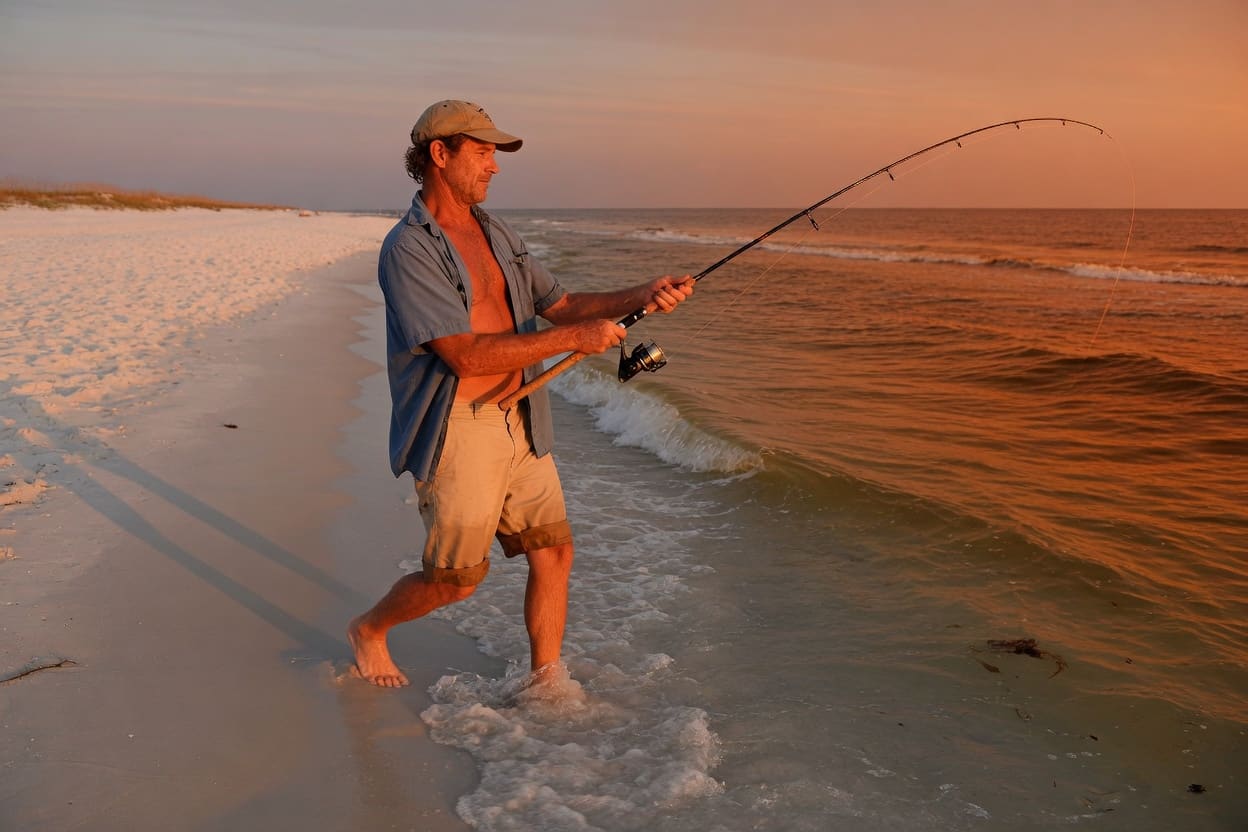
The folks who read the water for a living — the fishing crowd working the flats and the pass — shuffle without a second thought. It’s not caution, exactly. It’s just manners. You’re a guest in the shallows, and the shuffle is how you knock.
So that’s the whole thing. Slide your feet, don’t stomp, keep it up to about thigh-deep, and know that hot water is the fix if it ever comes to that. Do it and you’ll spend a lifetime of summers out here and never have the story — which, trust me, is the good outcome. The best beach encounters with a stingray are the hundreds you’ll never know you had.
Wave when you pass. I’ll be the one wading in like I forgot how to lift my feet.
— Chris