Sand in the Coffee, Vol. 108: the other shoreline, two hundred yards behind you
Myth, busted: a red flag does not cancel your beach day. It cancels the south side of it.
Perdido Key is a strip of sand with water on both sides, and in a lot of places the two shorelines are a two-minute walk apart. Most visitors spend a week here and never look at the one behind them. They stand on the Gulf side watching the surf misbehave, sigh, and go buy a T-shirt. Meanwhile, two hundred yards to the north, the water is knee-deep, flat, and occupied by one heron who was not expecting company.
the one rule that runs the whole island
The wind picks your side for you. Learn this and you’re ahead of most people with a parking pass:
- Wind out of the south (the usual summer and early-fall pattern): the Gulf gets choppy, the flags go up, and the back side — Big Lagoon, Old River, the bayous in Orange Beach — sits in the lee of the island and goes calm. Go north.
- Wind out of the north (what you get behind a fall cool front): it flips. The Gulf lies down flat and clear, the kind of water locals call slick calm, and the lagoon side gets the chop. Go south.
That’s it. You can check the wind and the flags for both states at /beach-today/, or skip the numbers and look at the cam: if the Gulf looks like a washing machine, your day is behind you.
One honest caveat. The flags are about the Gulf. Nobody is posting flags or sitting in a lifeguard chair on the lagoon side, ever. Calm and shallow is not the same as supervised, so the usual rules apply: kids in arm’s reach, and don’t swim alone.
where to actually go: the Florida side
Johnson Beach, the north shore. Johnson Beach is the national seashore at the east end of the Key. You pay the entrance fee at the gate (it’s per vehicle and good for a week; a national parks pass covers it), and then the road runs east for a couple of miles with small pull-offs before it simply stops. Everyone parks and walks south to the Gulf. Walk north instead. The sound side there is Big Lagoon: sandy bottom, seagrass beds, water to your shins for a long way out. Near the main pavilion there’s also a short boardwalk nature trail through the dunes and marsh, which is the best ten minutes on the island for anyone in your group who is Done With Sand.
Big Lagoon State Park. Same body of water, opposite shore, off Gulf Beach Highway. Small per-vehicle fee, a proper kayak launch, picnic shelters, shade, and, when it’s open, an observation tower that gives you the whole layout at once: lagoon, island, Gulf. If you’ve rented a kayak or paddleboard and the Gulf is rough, this is where you take it. Like every Florida state park it closes at sundown, so it’s a morning-and-afternoon plan.
and the Alabama side
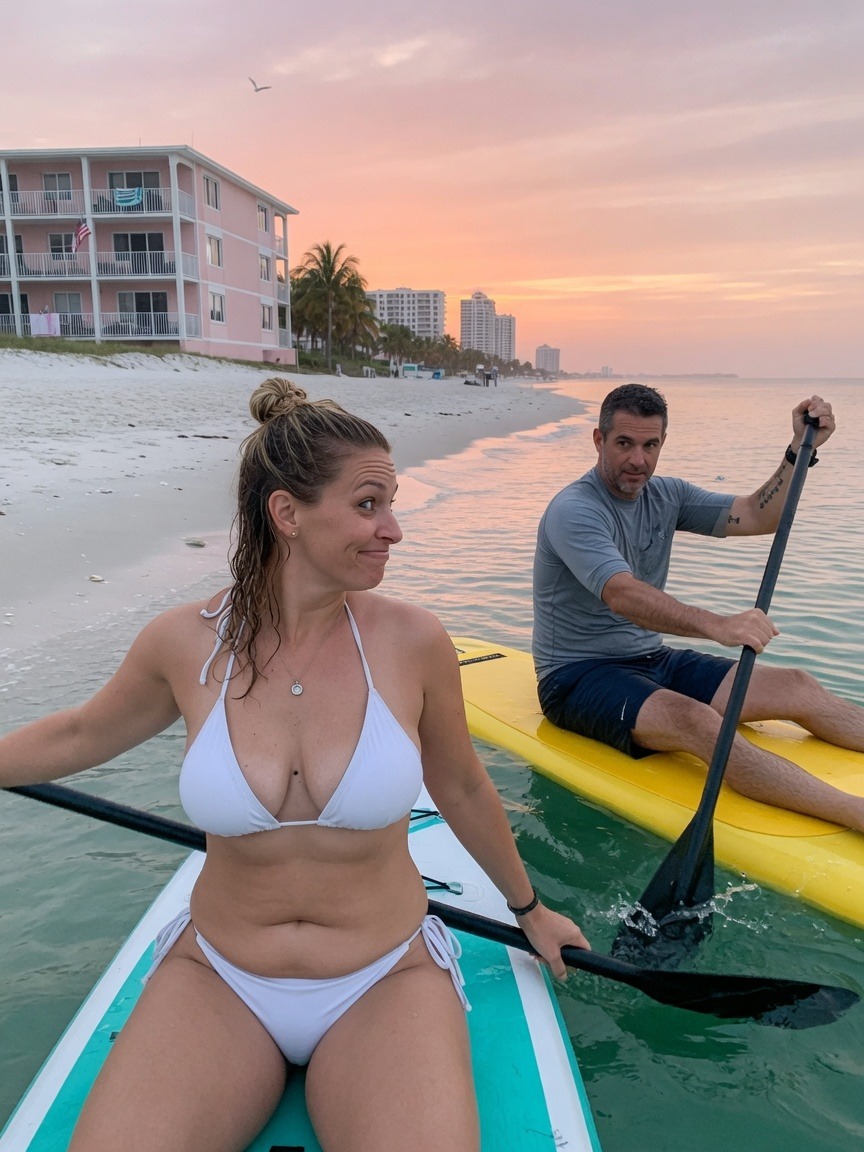
Orange Beach is mostly back water — more of the town’s shoreline faces a bayou or a bay than faces the Gulf. For a visitor without a boat, the easy entry is the public launch at Cotton Bayou, right on Perdido Beach Boulevard, where you can put a kayak or paddleboard in on protected water while the Gulf across the road is doing something dramatic. The islands just inside the Pass that you see ringed with boats on weekends are boat-access only; on a September weekday they’re a very different, much quieter place, and plenty of outfitters in town rent kayaks and pontoons by the half day. Stay well clear of the Pass itself in anything you paddle — the current through there is for engines.
what’s in the water (it’s the good part)
The lagoon side is a nursery, which is why it’s more interesting at ankle level than the Gulf is. In an hour of slow wading you can reasonably expect hermit crabs by the dozen, blue crabs going sideways with great indignation, schools of finger mullet, pinfish picking at the grass, and a heron or an osprey working the same flat you are. Dolphins come into the lagoon too, usually when you’ve put your phone away.
Three rules of the house:
- Shuffle your feet. Stingrays nap on sandy bottom in warm shallow water. Shuffling gives them notice and they leave. Stepping straight down on one is how people meet the urgent care staff.
- Wear water shoes. Not for the rays — for the oyster shell, which does not leave when you shuffle.
- Walk on the sand, not the grass. Seagrass is the whole reason the crabs and the fish are there. Wade the sandy lanes between the beds, and if you’re in a kayak, don’t drag it across them.
what to bring, and when
Less than you’d take to the Gulf, which is part of the appeal. No umbrella wrestling on the lee side. A chair you can sit in in the water is the pro move — six inches deep, feet wet, drink in a non-glass container. A dip net and a bucket will occupy a child for longer than any screen you own; look, then let everything go. Bug spray is not optional: the back side belongs to the no-see-ums (the biting gnats you feel but never find) at dawn and dusk, and on a dead-still day they’ll work a double.
So the window is mid-morning to late afternoon, roughly nine to four, with the best light and the most wildlife early. Bring water and snacks past the Johnson Beach pavilion, because there is nothing for sale out there and that’s the point.
Next time the flags are up and somebody in your condo says the day’s a wash, hand them a pair of water shoes and point north. The island has two shorelines. You already paid for both.
— Chris
P.S. Owners: your specials, menu link, or a reader promo code go straight on your page. Claim it free: /submit/claim/