Sand in the Coffee, Vol. 174: the shell walk, and how to tell a keeper from something still alive
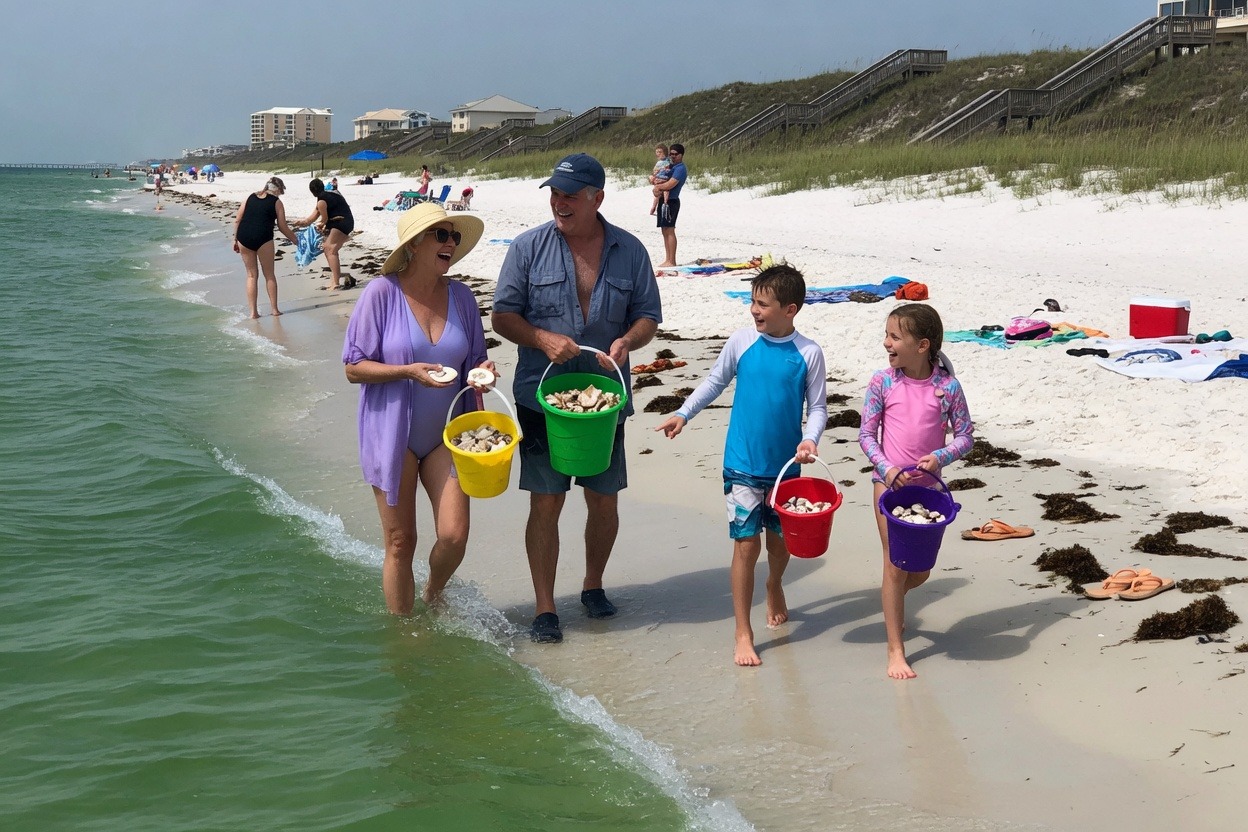
The best shells are not on the beach at noon. By noon the early walkers have been through, the sun has flattened everything into the same bright beige, and the good stuff is in somebody’s pocket.
The shell walk is the cheapest serious hobby on this coast. It costs nothing, it works in winter, and it makes a person walk slowly in one direction while looking down, which is the entire point.
when to go
First light, and as close to low tide as you can manage. Low tide leaves a fresh line of wrack, the strip of shells, seaweed and driftwood the water just left behind. The morning after a north wind or a cold front is usually the best, because the Gulf has been stirring things up all night. /beach-today/ shows the tide, and if you want to see the light and the surf before you commit your coat, the cam is live at /live-cam/.
how to walk it
- Walk the wrack line, not the water. The good pieces sit in the last row the tide left, not in the wet sand.
- Go slowly and go one direction. Turn around and the walk back is a second hunt, because the light is different.
- Look for the edge, not the shell. A curve of something pale against dark sand is easier to see than a whole shell.
- Bring a bag, not your hands. A cheap mesh bag lets the sand run out and spares your pockets.
- Wear shoes you do not mind getting wet. In winter, the water at the edge is cold enough to be an opinion.
the one rule that matters
If it is alive, leave it. A shell with something living in it is a home, not a souvenir. A few quick checks:
- Look in the opening. If you see a body, a foot, a flap or movement, it is occupied. Put it back where you found it.
- Check the color on sand dollars. A live one is covered in fine, fuzzy spines and looks brownish or darker. A white, bleached, smooth one is the empty kind, and that is the keeper.
- Trust your nose. A shell that smells strongly is not finished being lived in.
Put a live one back in the water gently, and do not pull anything off a dune or a plant on your way. Sea oats and the dunes they hold are doing the real job of keeping the beach in place, so stay on the walkovers and off the dune line.
what you will actually find
Mostly the common stuff: small whelks, scallop halves, coquinas in their little bright butterfly pairs, and the occasional sand dollar. Now and then, if you are patient and the tide cooperated, a dark fossil shark tooth turns up. Do not count on one. Count on the walk.
the bag, afterward
Rinse what you keep in fresh water and let it dry in the sun. If something still smells after a day, it was not empty, and it should go back outside.
— Chris
P.S. Know a restaurant, charter, shop, or event we’re missing? Add it — free, Florida side or Alabama side: /submit/
If a friend would like this, feel free to .