Sand in the Coffee, Vol. 80: how to watch the tropics like you live here
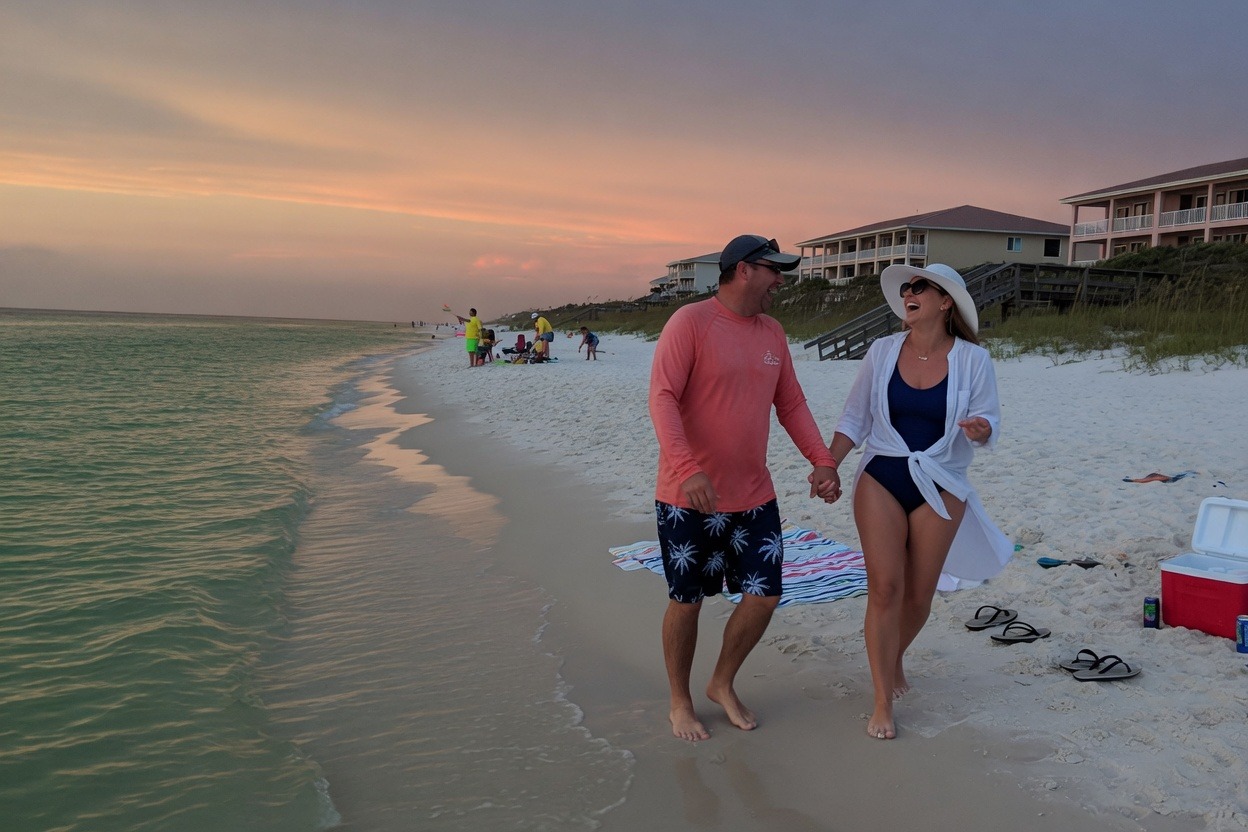
“Should we be worried about hurricane season?” A renter asked me that this week, in the tone people use for asking whether the water has sharks in it, and the honest answer to both questions is the same: yes, technically, and you’re going to be fine, and there’s a right way to think about it that nobody prints on the rental brochure. So today, the local method for watching the tropics — August through October, the season of the cone.
First, the current state of things, sourced the only honest way I can: this week’s local news was wall-to-wall football scores, gas prices, and a baseball team on a heater. Nothing tropical. On this coast, an empty tropics section is the good kind of nothing, and we treat it like a sunny forecast — enjoyed, never trusted past Thursday.
What the cone actually is
The cone — that shaded funnel you see on every forecast map — is the single most misread graphic in America. It is not a blast radius. It is not “everyone inside this shape gets a hurricane.” It shows where the center of the storm will probably track, and even then only about two-thirds of the time, historically. Storms are wider than their centers, which means weather happens outside the cone, and plenty of places inside the cone get nothing but a cloudy afternoon and a run on bottled water they didn’t need.
So when you see a cone seven days out that includes everything from Texas to Tampa: that is not a prediction. That is meteorology shrugging with confidence intervals.
The one-check rule
Here is the entire local monitoring system, and I am not simplifying for effect: check once a day, in the morning, and then go live your life. The hurricane center’s outlook map takes thirty seconds to read. If nothing out there has our name on it, you’re done. Close the app. The Gulf does not develop faster than a daily check can catch — you will always have days of notice for anything real, not hours.
What locals do not do is watch the spaghetti models — those tangles of colored possible-track lines — like a sporting event. Spaghetti models are entertainment for weather hobbyists, and I say that with love because I am one. Refreshing them hourly in week two of a system’s life doesn’t make you prepared. It makes you tired, and it ruins a perfectly good beach day over something that’s still, in the local phrase, just a wave off Africa — which is where most of these things are born, and where most of them should have stayed.
The lexicon, so you can follow along
Sit near locals in late August and you’ll hear the dialect. The cone, you know now. A wave off Africa — a baby disturbance thousands of miles away, not worth a full sentence of worry. The Waffle House index — the genuinely real FEMA shorthand that if Waffle House is open, things are fine, and if Waffle House is closed, it is extremely not fine. Generator guys — the neighbors who fire theirs up monthly “just to test it,” at 7 a.m., always. And plywood math — the driveway calculus of whether this one is worth boarding up for, a computation that has started more marriage disagreements than money has.
You don’t need to use any of it. But when the man at the bait shop says “it’s still just a wave,” you’ll know you’ve been handed a complete forecast.
What a visitor should actually do
Before you book (August–October): ask the rental company one question — “what’s your storm policy?” Some refund for mandatory evacuations, some only with travel insurance, and you want that answer in writing before your deposit, not during a press conference. Trip insurance in these three months is the rare upsell that’s actually the local move.
While you’re here: keep the gas tank above half. That’s it — that’s the whole prep list for a visitor on a quiet week. It’s a habit locals keep September through October anyway, and it costs you nothing but a slightly earlier fill-up.
If something real ever does develop: you will not need to detect it yourself. The county, your rental company, the bartender, and the man at the bait shop will all be louder than any app, on both sides of the state line — Orange Beach and Perdido Key run the same playbook. Follow what locals do and when they do it, and note the order of operations: the flags and the beach will tell you first, days before anything else changes. That’s what the beach page is for — today’s flag, today’s radar, and the live cam, if you want a second opinion straight from the source. Most August mornings the Gulf is lying there flat as a griddle, entirely unaware it has a season named after it.
The posture
One more thing, and it’s the real answer to that renter’s question. The calmest people on this coast are the ones who have been through the most storms. Don’t ask them if they’re scared — you’ll get a polite look. Ask them what they did for Sally in 2020 and you’ll get a forty-five-minute story with an intermission, probably involving a boat that ended up somewhere boats don’t go.
That calm isn’t denial. It’s fluency. The season is long, the Gulf is big, and the odds that any given week — your week — is the week are small. So check once with your coffee, keep the tank half full, and then go claim your sand. Worry is not preparation. Preparation is preparation, and it takes about thirty seconds a day.
— Chris