Sand in the Coffee, Vol. 94: how to spot a local in one glance
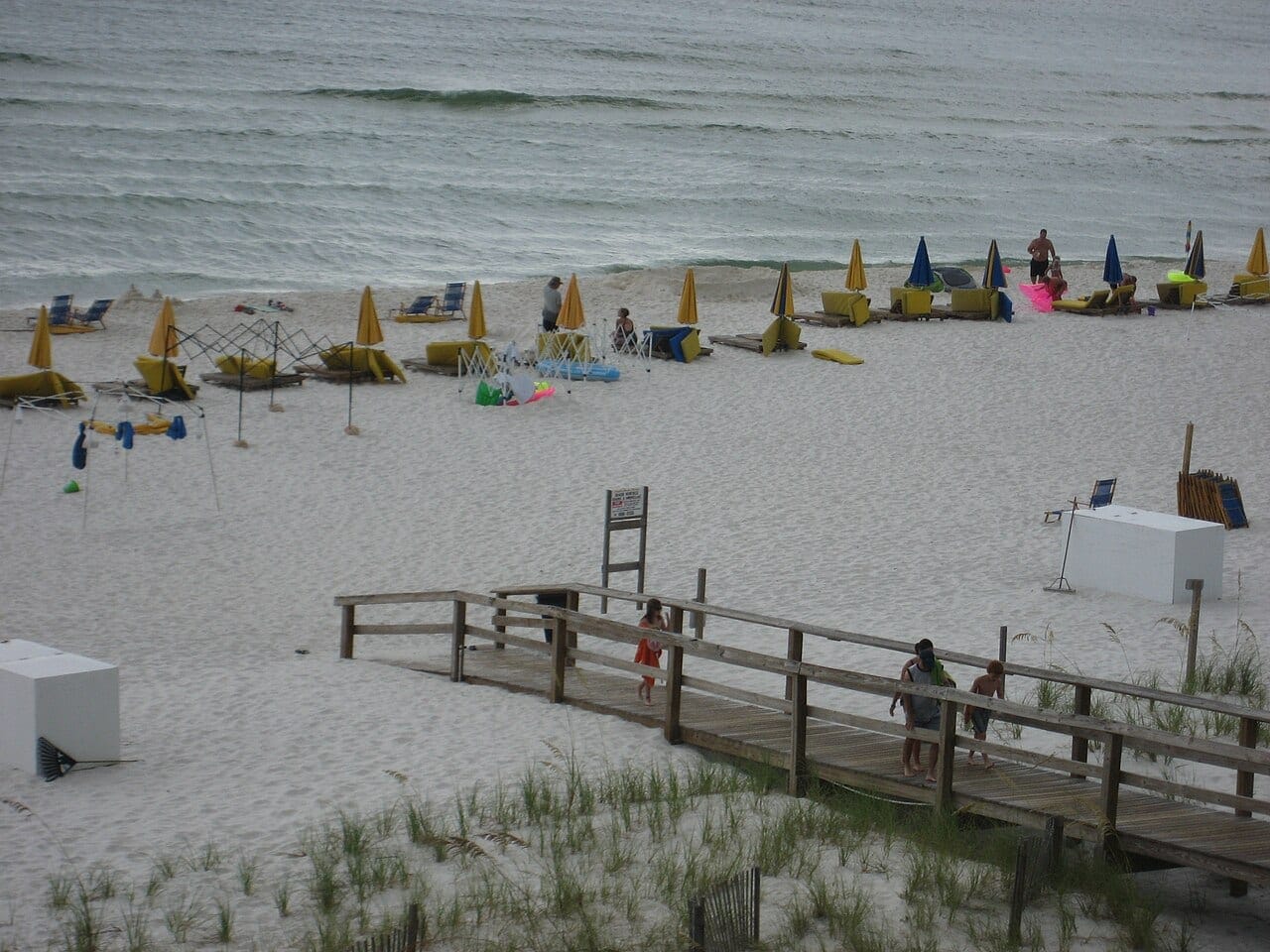
Sunday, a little after seven, the Johnson Beach walkover. Two groups pass each other on the boards. One is coming down: a wagon, a tent still in its bag, three coolers, a child already asking a question. The other is coming up: one man, one chair folded under his arm, a towel around his neck, wet to the knees, done.
They nod at each other. Nobody says anything. But everybody on that walkover knows exactly which one lives here.
It’s not the tan. It’s not the truck. After Labor Day the tells get easier to read, and if you’re here this week — or you own here and want to stop getting charged like a tourist — it’s worth learning them. Not to fake it. To copy it. The local way of doing the beach is just the better way, and we’re not precious about sharing it.
Tell one: the gear
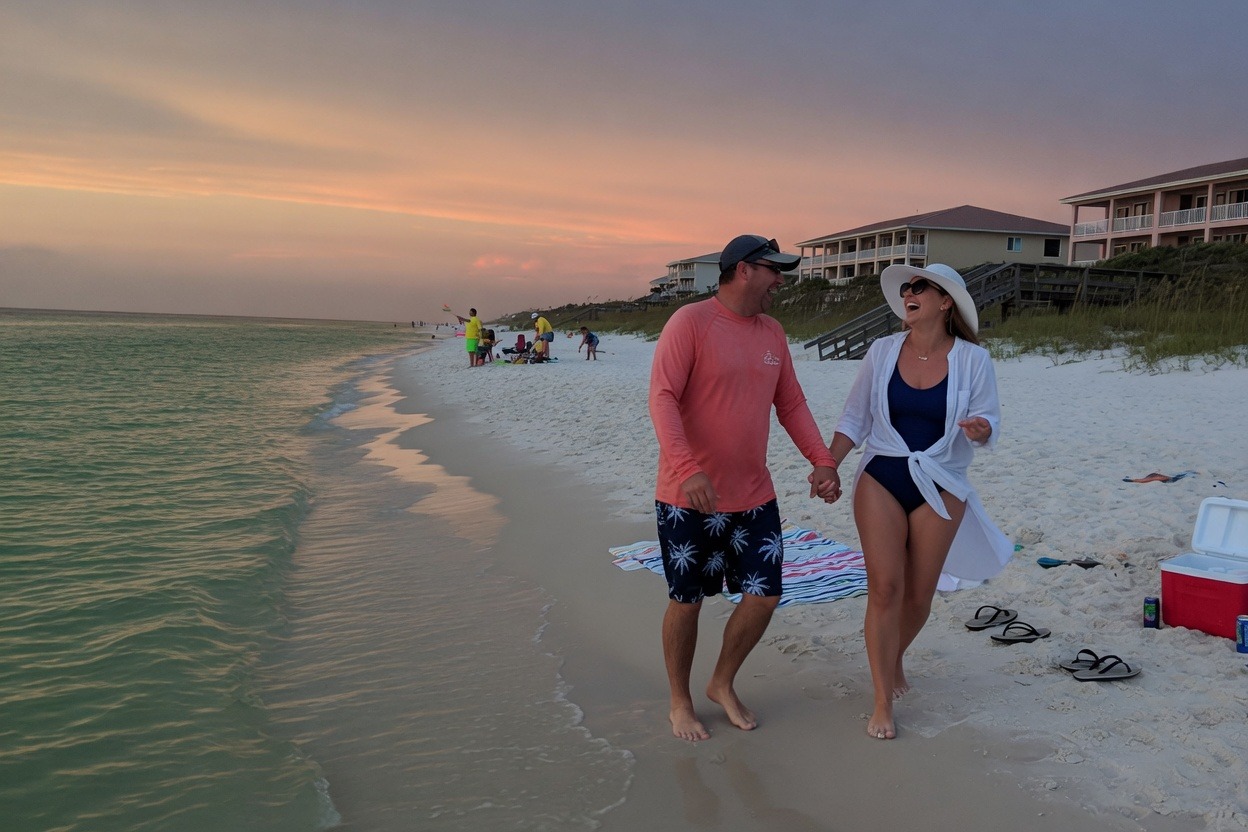
A local has one chair. Possibly zero. There’s a towel, a cup that keeps ice, and a hat that has seen things. That’s the whole kit, and it fits under one arm, which matters because the local is not planning to be in one spot for six hours. The local is planning to be in the water for forty minutes and then go get breakfast.
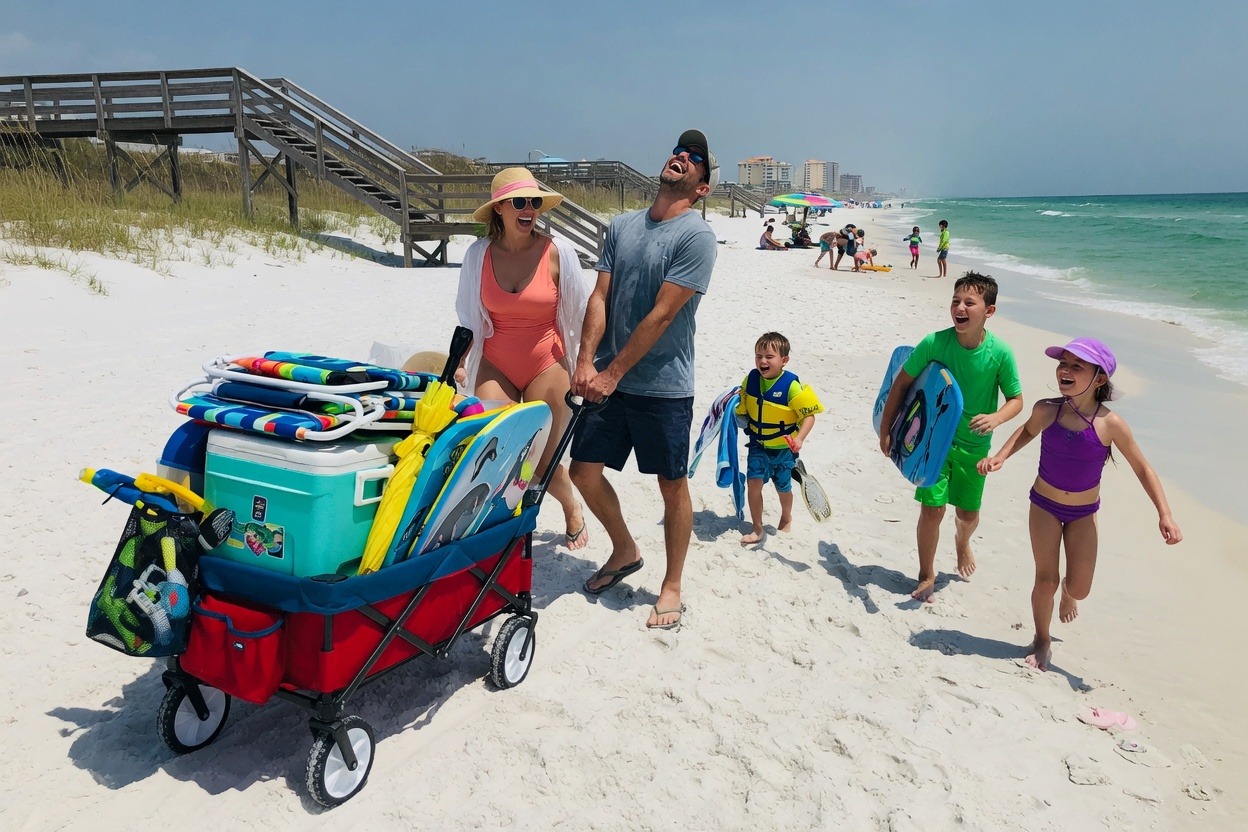
The visitor has a base camp. I say this with love, because I’ve been the visitor. But notice what the base camp costs you: twenty minutes to set up, twenty to break down, and a spot you now feel obligated to defend all day like it’s Fort Morgan. The beach is not going anywhere. Bring less, come back tomorrow.
Tell two: the clock
This is the big one. In September a local goes down at seven in the morning or after four-thirty in the afternoon, and almost never in between. Sunrise is a little after six-twenty this week and sunset is a hair after seven, and the two hours on either end are the whole reason people live here. Middle of the day is when the sand is hot enough to be a personality test, and the local has left it to the people who paid for the week.
If you’ve only ever seen this beach at one in the afternoon, you have not seen it. Come down at seven. Different water, different color, half the people, and the dolphins work the trough close in that early. Then go eat. Then come back at five when the light goes gold and the wind lays down. Two short trips beat one long one every time. That’s not a secret, it’s just a schedule.
Tell three: where the car is
A visitor drives to the biggest lot and circles. A local knows the small public accesses along Perdido Key Drive that hold twelve cars and never make the brochure. On the Alabama side, the local knows Orange Beach posts its flag right at the access, so you know what you’re walking into before your shoes are off.
Two paid options are worth the money and locals use both. Perdido Key State Park is a few dollars a car and quiet enough to hear your own footsteps. Johnson Beach is National Seashore: the weekly pass runs about $25 a car and the annual is about $45, which means the annual has paid for itself by your second trip. That’s the tell right there. A local has the annual pass on the windshield and has stopped thinking about it.
Tell four: the water gets read before the sky
Watch a visitor arrive: they look up. Sun, clouds, the whole sky, like they’re deciding whether to go to the beach they are already standing on.
Watch a local arrive: they look at the flag, then at the water color, then at where the sandbar is breaking. The sandbar, if you’re new, is the ridge of sand a short swim out where the waves stand up and everybody in a rental ends up waist-deep taking a photo. Between the beach and that bar is a trough, and on a rougher day the trough is where the rip runs. Flags tell you the day. Green, go. Yellow, mind the trough. Red, get wet to the knees and be happy about it. Purple means something is stinging. It’s jellyfish, not sharks, and September has plenty.
On the Alabama side, “the Pass” is Perdido Pass, the cut under the bridge where the boats come and go. Locals swim near it exactly never, because the current there doesn’t care how good a swimmer you are. Check the flags and conditions before you drive down. That’s not a tourist thing, that’s what everybody who lives here does with their coffee.
Tell five: the questions
You can hear a local from thirty feet by what comes out of their mouth.
A visitor asks: Is it always this hot? (Yes.) Is that seaweed? (In June, that’s June grass. It’s not a band. In September it’s mostly gone.) Are there sharks? (It’s the Gulf. Yes. They are not interested in you.)
A local asks: How’s the water? Anything biting? Y’all get any rain yesterday? Notice those are all questions about conditions, not about the existence of the beach. If you want to sound like you live here, ask a surf fisherman what he’s seeing instead of what he’s caught. And if you want to know what’s biting without bothering him, the fishing page is a good start.
Two more vocabulary tells, just so nobody’s left out. “Slick calm” is a flat Gulf with no wind on it, which we get in September and it’s worth changing plans for. “Snowbirds” are the folks from up north who arrive around late October and stay through the winter, and when you hear a local say it there’s a tone, and the tone is affection wearing a grumpy hat.
Tell six: the Flora-Bama on a Tuesday
A visitor goes to the Flora-Bama on Saturday night and stands in a line. A local goes on a weekday afternoon, sits at the bar on the beach side with the sun behind them, and leaves before the band. Same building, completely different place. Weekday afternoons in September are the best hours that bar has all year, and the happy hours on both sides of the state line are built for exactly that crowd.
Same rule applies up and down the road. The place with a wait at seven has a seat at four-thirty. Locals don’t eat early because we’re old. Well. Not only because we’re old.
The actual tell
Here’s the one that gives it away every time, and it’s not gear or timing or parking.
A local looks at the water like it’s news.
Because here, it is. It changed since yesterday and it’ll change again by dark, and the whole reason anybody puts up with the summer traffic and the hurricane season and the price of a gallon of gas is to be around when it does. Copy the chair, copy the clock, copy the annual pass. But if you really want to pass for one of us this week, walk down to the edge, stand there for a minute, and actually look.
Then come tell us how it was. We’re the ones with one chair.
— Chris
P.S. Owners: your specials, menu link, or a reader promo code go straight on your page. Claim it free: /submit/claim/