Sand in the Coffee, Vol. 54: how to spot a local in one glance
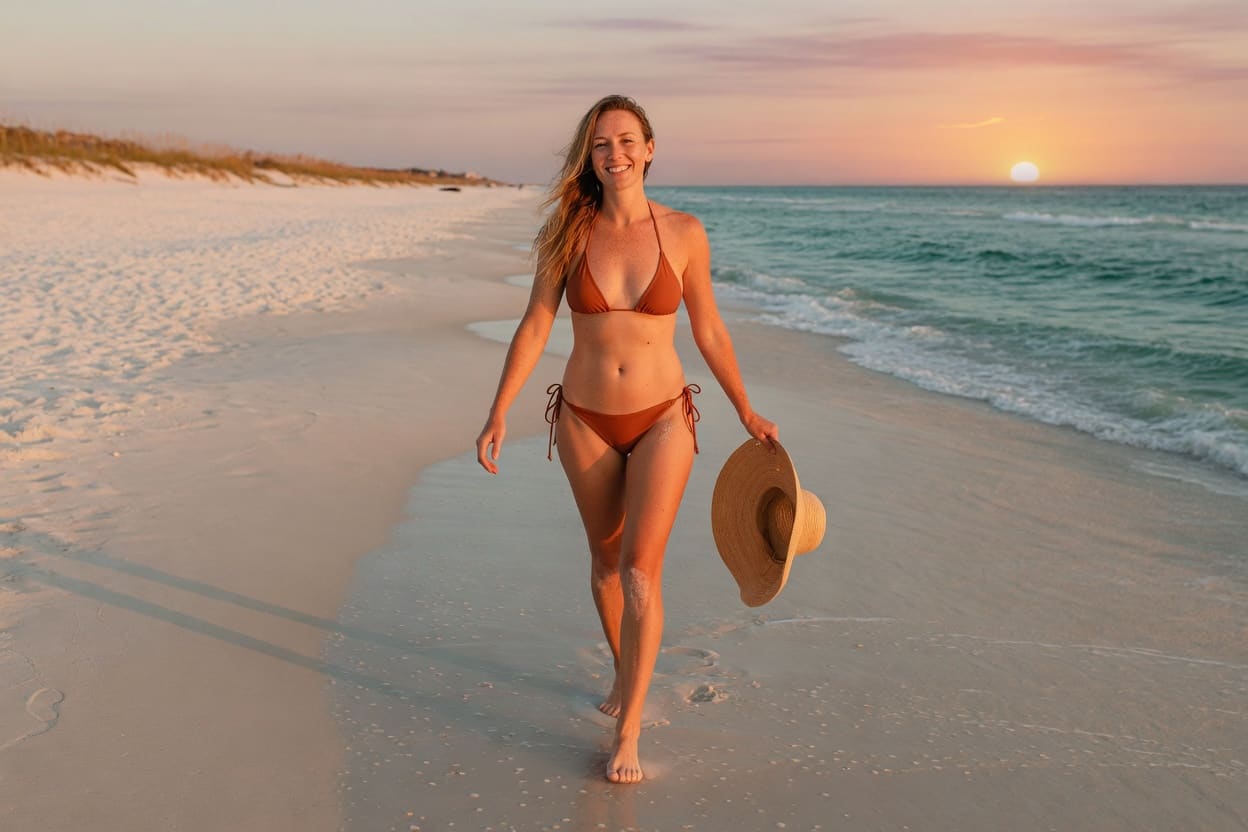
There’s a couple that walks past me most mornings around the same time, and I clocked them as locals from about forty yards out. Not by the tan. Not by anything they said. It was the way the woman glanced up at the flag on the lifeguard stand, kept walking without breaking stride, and steered them fifteen feet down the beach to a spot I already knew was the good one.
That’s the thing about locals: we don’t announce ourselves. But we’re easy to read once you know the tells — and here’s the fun part. Every single one of those tells is also a small piece of advice you can just take. Learn to spot a local and you’ve basically learned how to have a local’s beach day. So here’s the field guide.
We Check the Flag Without Stopping
The single biggest giveaway. A local walks onto the beach and their eyes flick up to the flag on the lifeguard stand — green, yellow, red, double red, purple — clock it, and keep moving. No pause, no discussion. We already looked at today’s conditions over coffee, so the flag is just confirmation.
The steal: check the flag before you even leave the condo, and glance at it again when you hit the sand. Double red means the water’s closed, full stop, no exceptions, not even “just to the knees.” Purple means something in the water can ruin your afternoon. It takes two seconds and it’s the difference between a good day and a lifeguard’s whistle aimed at you.
We Travel Light
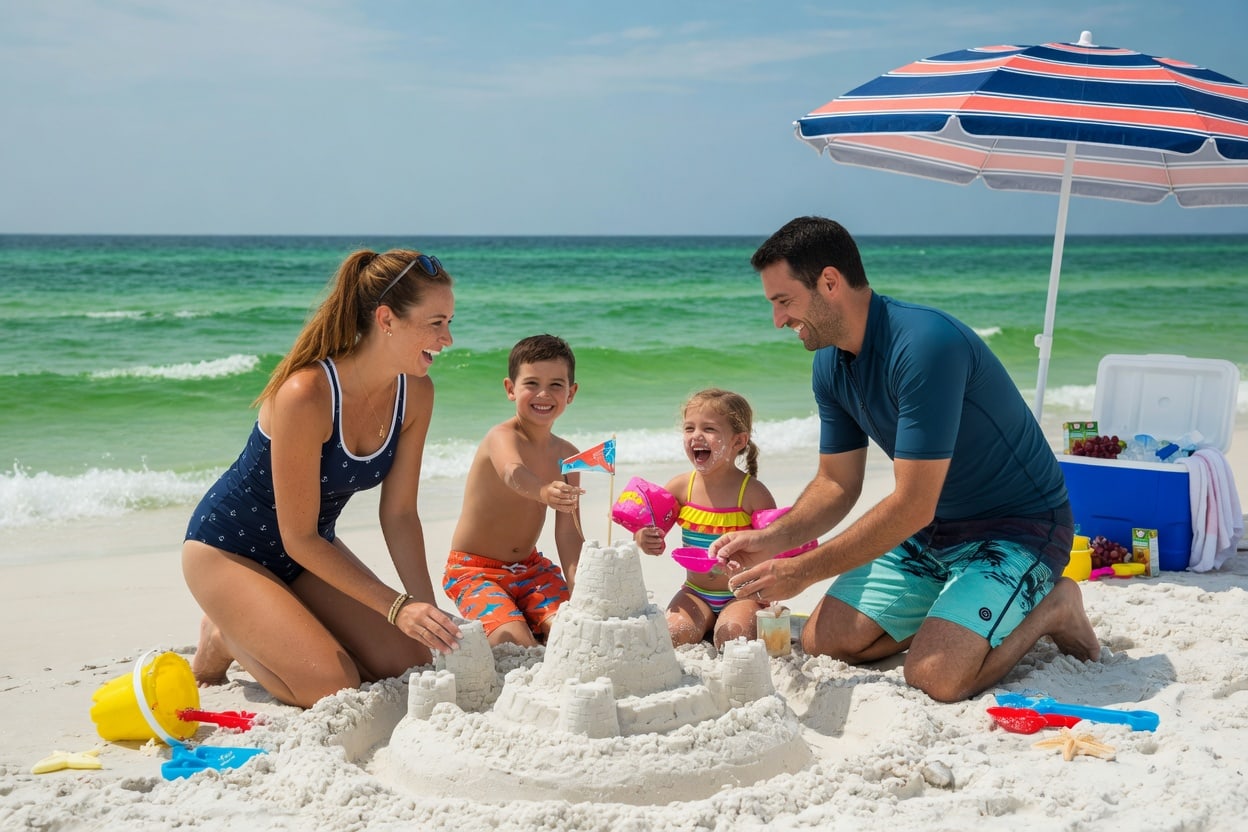
You can spot the visitor caravan from space: the wagon, the canopy, the four chairs, the cooler the size of a chest freezer, two boogie boards nobody will use, and a speaker. A local shows up with one chair, one bag, a towel, and a single umbrella they know how to plant.
I’m not judging the wagon — some days with kids you need the wagon. But there’s a lightness to a local’s setup because we know we can come back tomorrow. When it’s your whole vacation, you pack like it’s the only beach day you’ll ever get. When you live here, you pack like it’s Tuesday.
The steal: you don’t need most of it. Chair, shade, water, towel. The less you haul across the soft sand at high tide, the more you’ll actually want to come back the next morning.
We Dress Like We Plan to Survive July
Look for the long-sleeve sun shirt, the wide-brim hat or visor, the actual real sunglasses. A local in July is dressed less for the photo and more for the fact that the sun out here is not messing around — the same sun that had outdoor work crews shifting their whole schedules this week to dodge the worst of the afternoon heat index.
The dead giveaway of a visitor’s third day is the sunburn in the exact shape of a tank top. We’ve all been that person once. We just decided once was enough.
The steal: sun shirt over sunscreen-on-everything, reapply anyway, and treat the hours from noon to about four like the sun’s shift, not yours. Morning and late afternoon are the good light and the survivable temperature. The middle of the day is for lunch, a nap, or the shade.
We Read the Sky and Leave Dry
A local starts glancing west around two or three, reading the clouds building over the mainland, and will fold the chair and stroll off while the sky’s still mostly blue. Visitors tend to wait for the first fat raindrop, then sprint. We don’t sprint. We read the sky and leave on our own terms, dry, a little smug.
The steal: the summer storm usually rolls in mid-to-late afternoon and doesn’t stay long. You don’t have to fear it — you just have to respect the timing. Get your beach hours in early, watch the western sky, and treat the storm as your cue to go get a shower and an early happy hour rather than a disaster.
We Wave, and We Don’t Feed the Gulls
Two small ones that travel together. Locals nod or wave at the people they pass — it’s a small town on a big beach, and you’d be surprised who you keep running into. And a local will never, ever hand a seagull a chip, because we know exactly how that ends: one gull becomes forty gulls, and forty gulls become a problem for everyone in a hundred-foot radius.
The steal: say hey to your beach neighbors, and guard your snacks like state secrets. The gulls are running a very old con and they are extremely good at it.
The Short Version
You spot a local by the small stuff: the glance at the flag, the light pack, the sun shirt, the early exit ahead of the storm, the wave, and the fierce refusal to feed a single gull. None of it is a secret handshake. It’s just a handful of habits that make the beach easier, and every one of them is yours for the taking the second you decide to use it.
Do all six and I promise you’ll pass. Somebody forty yards out will clock you glancing at the flag and steering to the good spot, and think, oh — one of us. If you want to go a step further, watch how the fishing folks read the water and the wind; that’s local-level, the graduate course. But the flag and the light pack will get you most of the way there tomorrow morning.
Wave when you pass. I’ll be the one with the one chair, keeping a suspicious eye on a gull.
— Chris